One reporting path
25M to <100K rows
Reduced through pre-aggregation and use-case-specific reporting structures.
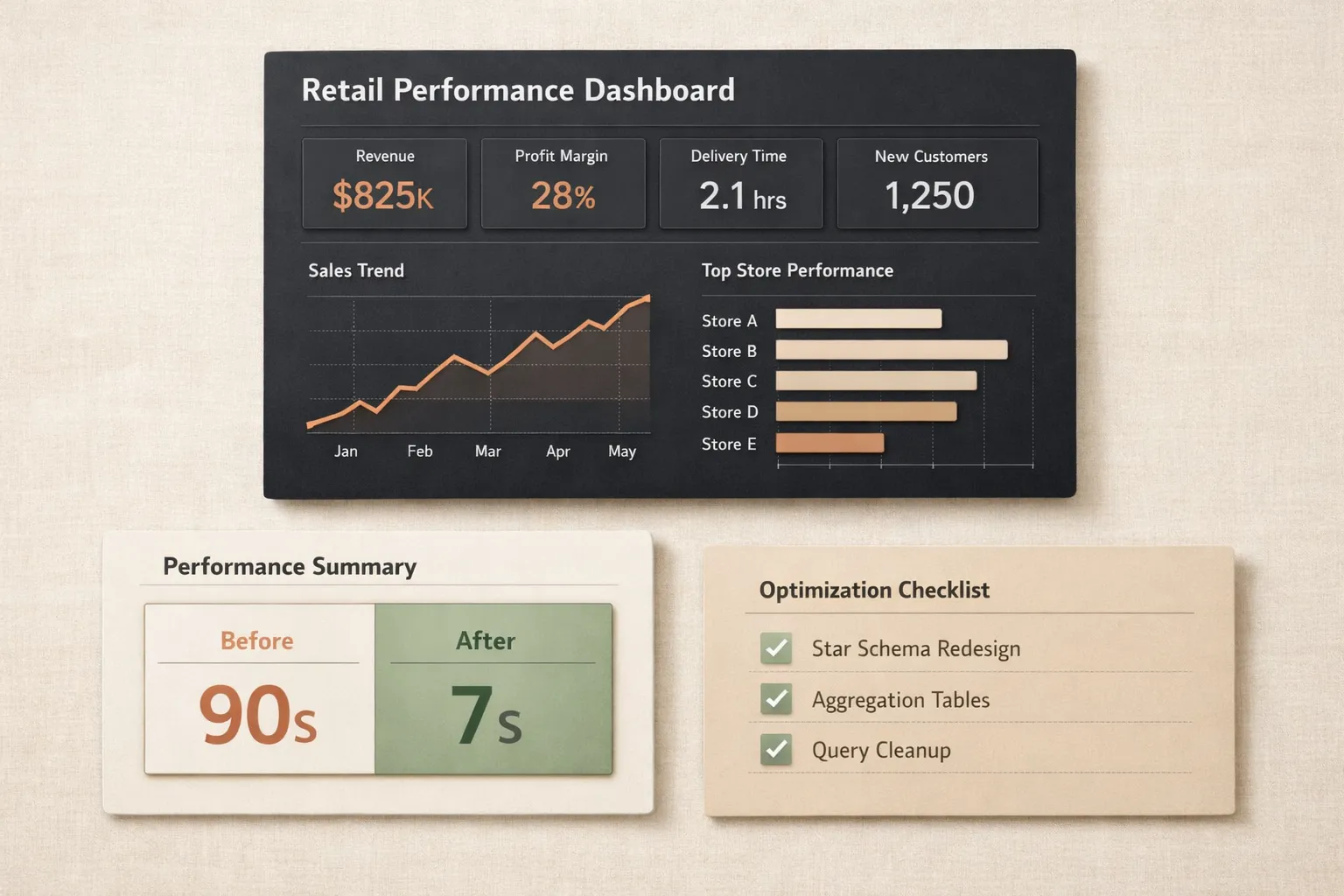
Summary
One analytics path went from about 25 million rows to under 100,000 through the pre-aggregation redesign. In later test rounds under 30-user concurrency, identified issues dropped from 43 to 2 after a combined model and infrastructure tuning pass.
Outcome-first metrics
One reporting path
25M to <100K rows
Reduced through pre-aggregation and use-case-specific reporting structures.
Concurrency test
30 users
TabJolt-based load testing for interactive dashboard usage.
Issue count
43 to 2
Later test round after architecture and infrastructure tuning.
Problem
A retail analytics platform needed a more maintainable reporting-layer design and better performance under concurrent usage as analytics adoption expanded.
Context / Constraints
The modernization effort had to improve performance without breaking downstream reporting for a broader analytics rollout.
Approach
Redesigned the consumption layer into subject-specific models and pre-aggregated tables, ran TabJolt-based concurrency testing across the analytics stack, and coordinated with the platform team on the infrastructure tuning needed alongside the model changes.
Outcome
One analytics path went from about 25 million rows to under 100,000 through the pre-aggregation redesign. In later test rounds under 30-user concurrency, identified issues dropped from 43 to 2 after a combined model and infrastructure tuning pass.
My Role
Reporting-layer redesign, performance testing, and rollout coordination
Trade-offs / Lessons
Additional Notes
Contact
Start with the current constraint, what needs to change, and where delivery risk is showing up now.
Related Work
Case studies connected by shared themes, delivery patterns, or adjacent technical focus.
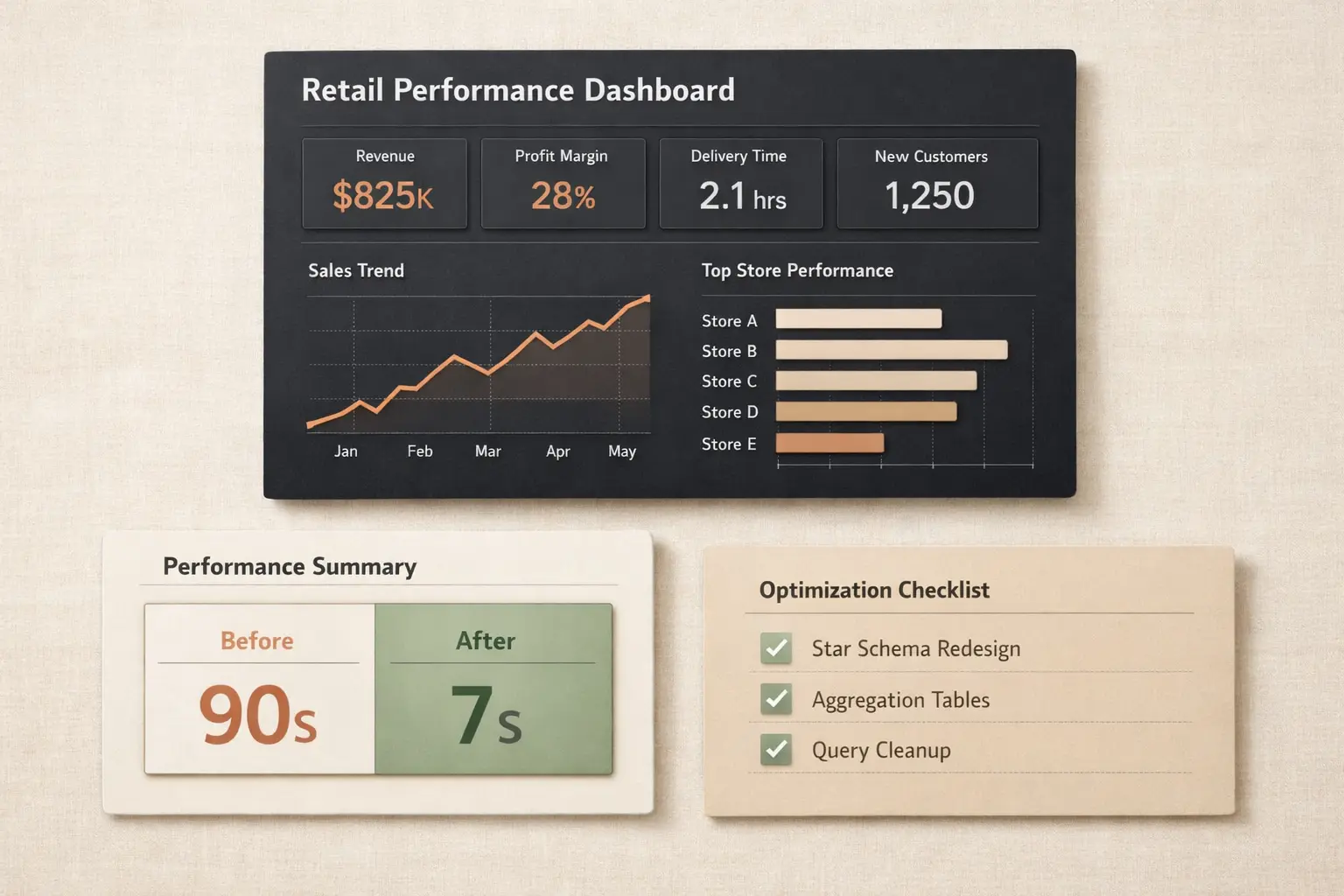
Performance Tuning
A retail analytics dashboard used by five departments loaded in over 90 seconds, making it impractical for daily decision-making.
What this proves
Measurable performance proof tied to daily operational use — not a lab benchmark.
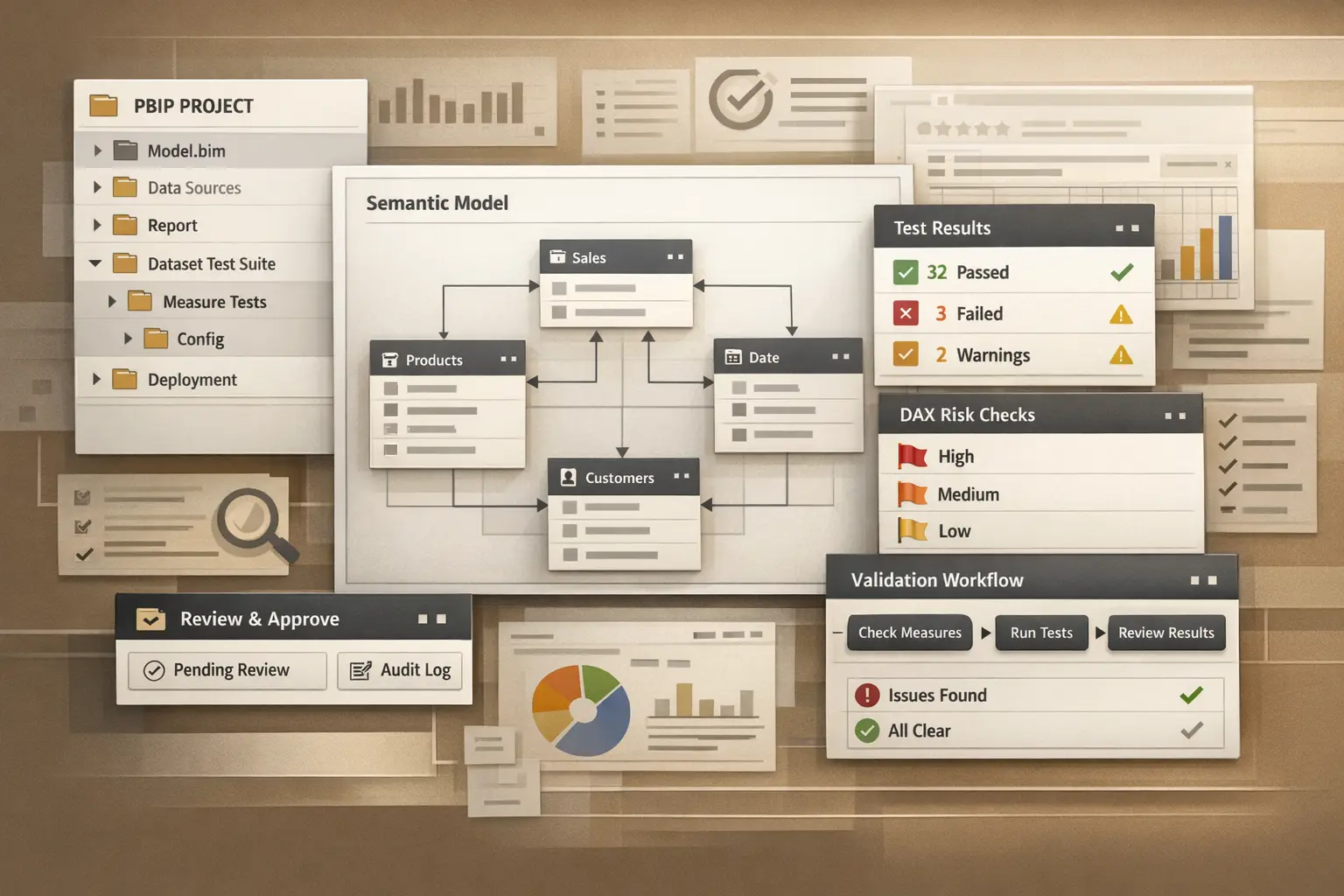
Semantic Model Engineering
Maintaining 10+ production Power BI datasets and reports alone made measure-level regressions easy to miss. Changes were reviewed manually, if at all, and confidence in deployment dropped as the models grew. The underlying issue: a `.pbix` opened and saved is a review black box — nothing compares the model before and after.
What this proves
Shows a recent workflow built from real production-maintenance needs — PBIP + TMDL + PBIR as the foundation for treating Power BI like production code — with public proof through a GitHub repo and a Mar 2026 speaking session.